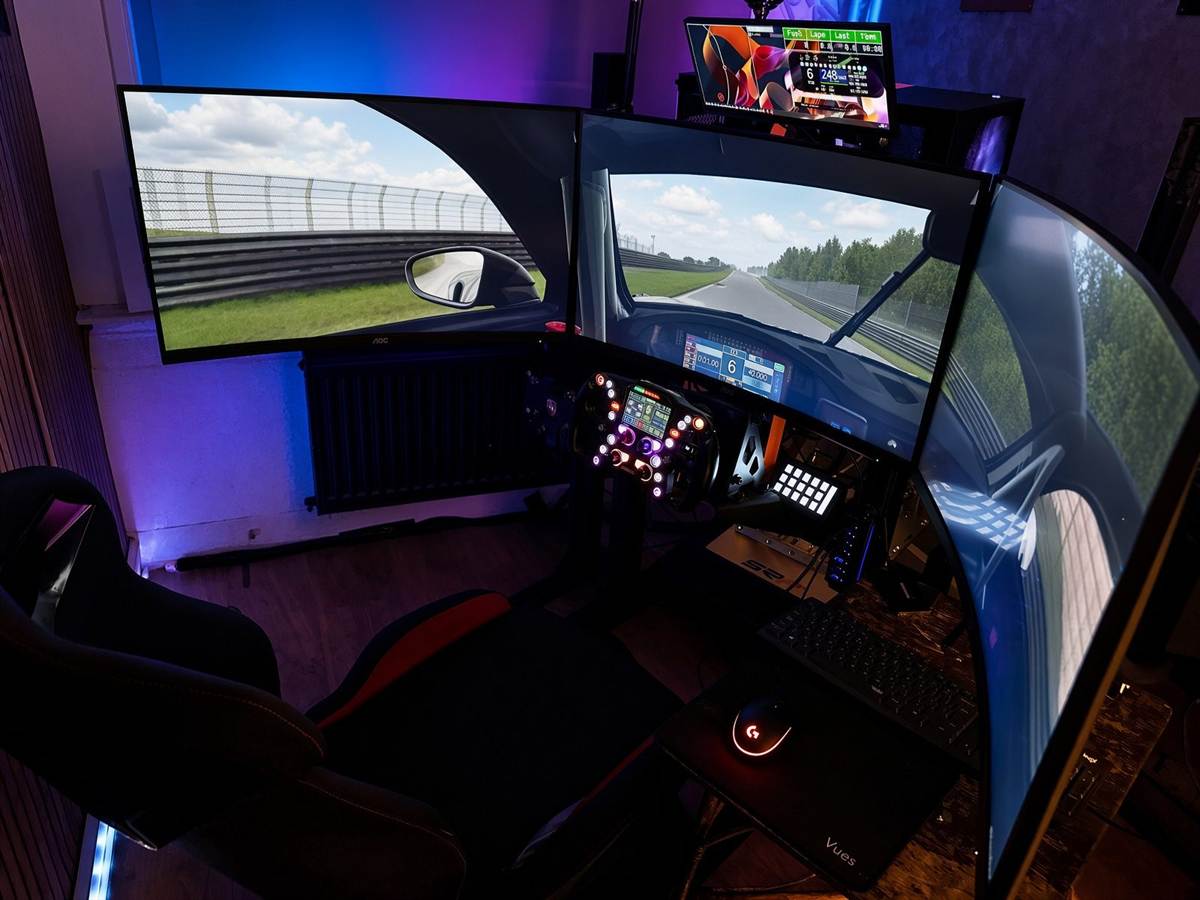
You have the hardware, you have the sim, and now that first online race is waiting. Exciting. But it is really fine — and with a few simple rules you race like someone who knows what they are doing.
From registration to finish — step by step
This is what a first race looks like in practice. We assume iRacing, but the broad lines apply everywhere.
- Pick a calm rookie series. Start with a series for beginners, with a car that does not have too much power. Calm entry-level material is exactly what you want now.
- Register for a session. You see when the next race starts. You sign up and are automatically placed with drivers of your level.
- Drive the warm-up or practice. Before the race there is time to bed in. Do a few laps, get used to the track and check that everything feels good.
- Do qualifying — or skip it. You may qualify for a starting spot, but you do not have to. Skip it and you simply start at the back. For your first races that is fine.
- Get away calmly at the start. The start is the busiest and most dangerous. Leave some space, brake early for turn 1 and accept that you lose a few places. Better than a crash.
- Drive clean to the finish. Your only goal: get to the line in one piece. Consistent laps pay more than a risk that takes you out.
The rookie experience
Rookie races have a reputation: busy, sometimes chaotic, and in turn 1 often messy. Do not let that put you off. Everyone started here once, and it is exactly the place to learn.
The trick is simple: drive as if you want to be invisible. Stay out of the traffic, give space, and let the hotheads up front push each other off. While they crash, you quietly move forward. That way you build your Safety Rating at the same time — read more in iRating and Safety Rating explained.
The unwritten rules
Sim racing has race etiquette nobody tells you in advance, but everyone expects. Know these and you race cleanly from the start:
- One defensive move. You may defend your line, but pick your place once — do not weave in front of someone.
- Leave space on an overtake. If someone has their nose alongside you at turn-in, they have a right to space. Going through the corner together is always better than going into the gravel together.
- Blue flags. If you are being lapped by a much faster car (or the leaders), you get a blue flag. Hold your line and let them past smoothly; do not suddenly swerve aside.
- Give the place back. If you push someone off by accident or gain an advantage by cutting, give the place back cleanly. That is the norm, and it is appreciated.
- Pit lane. Respect the speed limit in the pits and stay on your line. Too fast or weaving earns penalties and angry neighbours.
- Rejoining after a spin. Look first, wait for a gap and rejoin calmly. Never spin blindly back onto the track.
What do you do in a crash?
It will go wrong once — for everyone. What you do then makes the difference:
- Stay off the throttle when there is an incident ahead. Lift, see where the gap is, and drive calmly around it. Joining a mess only makes it worse.
- Stopped in a dangerous place? Check your mirrors and wait until it is safe before you rejoin.
- Car damaged? Consider a pit stop for repairs instead of limping on. Finishing counts, even at half speed.
- Do not stew for long. Briefly analyse what went wrong, and handle it better next race. Everyone has bad races.
Why your first races should be slow
This sounds odd, but it is the best advice we can give: drive your first races deliberately slowly. Not slow as in “sluggish”, but calm and within your ability, without chasing every tenth.
Why? Because at the start you still have no feel for the car’s limit. Go full send immediately and you spin, crash and tank your Safety Rating. Drive calmly and you finish, learn the track and build confidence. Speed comes naturally once you are consistent — that is not a cliché, that is simply how it works.
Common beginner mistakes
- Wanting too much in turn 1. Most incidents happen in the first corner of the first lap. Leave space and just survive the start.
- Switching cars too quickly. Stick with one car and one track until you really know them. Switching slows your learning.
- Tuning setups yourself immediately. Start with a ready-made setup. We arrange those per race — see our setups.
- Giving up after a bad race. One messy race means nothing. Just race the next one again.
- Plodding on alone. You learn much faster with people around you who give tips. That is what a community is for.
And that last point is exactly what we are for. Not sure which series to pick or do not want to race your first race alone? Drop in, and someone will race with you.